


It's one of the coldest winters in many years but there is still plenty to do in the garden. From planting up a bowl of colour, protecting the Aloes and Mulching with the falling leaves. Plant something you love in the garden for foliage-colour now and it will reward you every year as winter sets in - Sacred Bamboo always gets our vote.
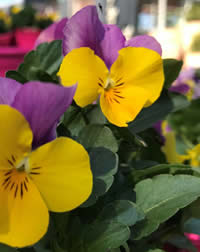 colour for the patio |
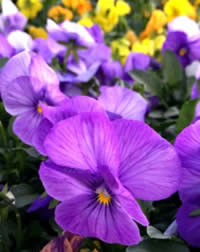
plant can have up to 800 flowers? |
The only way to keep your home filled with colour is to plant some. Winter Pansies or Viola still remain one of the best sellers in South Africa and for good reason. Did you know each plant can have up to 800 flowers? That's quite incredible if one thinks about that. A single tray or a couple of instant colour pots will fill up a bowl to grow on the patio table as an all season centrepiece. Plant them with potting soil. Feed them every second week with Multifeed Flowergro. Deadhead them frequently and water them once a week. They will last right through to October and eventually cascade right over your bowls edge onto the table.
If your patio table is in the shade for most of the day then change over to a bowl of Primroses or Cyclamen for a show just as pretty.
Colourful Kale
The fancy-leaved cousins of cabbage make a bold statement in the cool season garden. They are edible but are bitter so one would not grow them to eat but they make great companion plants in mixed plantings and always draw attention. They were developed as a winter colour leaf by hybridizing cabbage and cauliflower and after years of development we get the range of colours we have today. They are extremely cold-tolerant and need full sun to light shade. The more sun and colder the more compact they will grow.
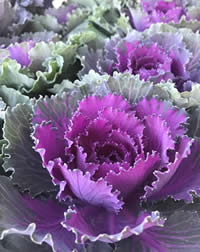
a bold statement |
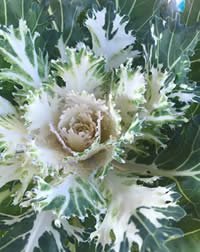
draw attention |
Aloes for pollinators and birds
Most Aloes are suited to hot dry positions but will grow in any garden where they get a lot of sun and are planted in well drained soil. We love winter aloes because this is when they flower in striking tones of yellow through orange to red and the nectar from the aloe flowers attract many of the nectar loving birds as well as bees and other beneficial insects.
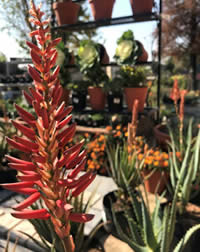
they mature |
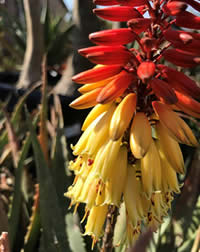
flowering season |
Be on the lookout for Scale which is the most common problem locally through the winter months. This shows as a white speckle which covers the underside of the leaves. Spray with a contact insecticide. In recent years we have seen more and more Kanker on aloes. This is where one sees the flowers or leaves almost mangled they are that malformed. This is caused by a mite insect which is almost impossible to see so most people miss it until the damage is dome. Use a systemic insecticide such as Efekto Plant Protector as a drench at flowering time as well as in midsummer to keep it under control. Destroy the leaves and flowers that are ruined to limit the infection and to stop it from spreading.
Permanent Colour
Colour does not only have to come from bedding plants in winter. The cold temperatures and frost colours a range of plants to striking shades of reds to burnt pinks. By far the most popular are the different varieties of Nandina which we believe no garden should be without. Also known as Sacred Bamboo they are incredibly versatile growing in sun and shade as well as making a striking container plant.
Nandina are evergreen and what makes them special is the colour they provide in the garden during all four seasons of the year. In the spring, the new foliage emerges as bright bronzed red and is soon followed by large panicles of creamy white flowers. Clusters of bright green berries replace the flowers and by late summer the berries will ripen to a bright red. The berries will remain until they are discovered and enjoyed by the local birds.
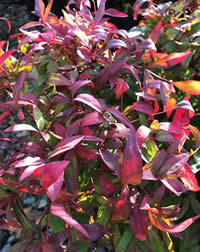
rewarding colour |
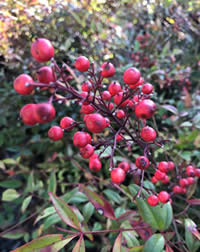
Nandina attract birds |
Queen of Winter Colour
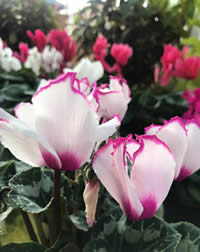
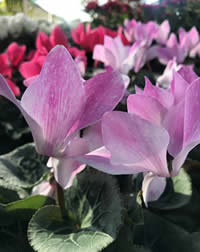
The classic Cyclamen is one of our all-time winter favourites for colour. Great indoors or outside on the patio or in the shade protected from frost they flower for months this time of the year. Their upside down flowers start right at the base and then stretch up like bird wings in shades of pink through purple. Keep them slightly on the dry side and feed every alternate watering with Multifeed Flowergro to promote even more flowers. Indoors they do best in a bright room but not too close to the window catching afternoon sun as they prefer to stay slightly cooler.
or outdoors |
them or they will rot |